
Module
Grow-Finish
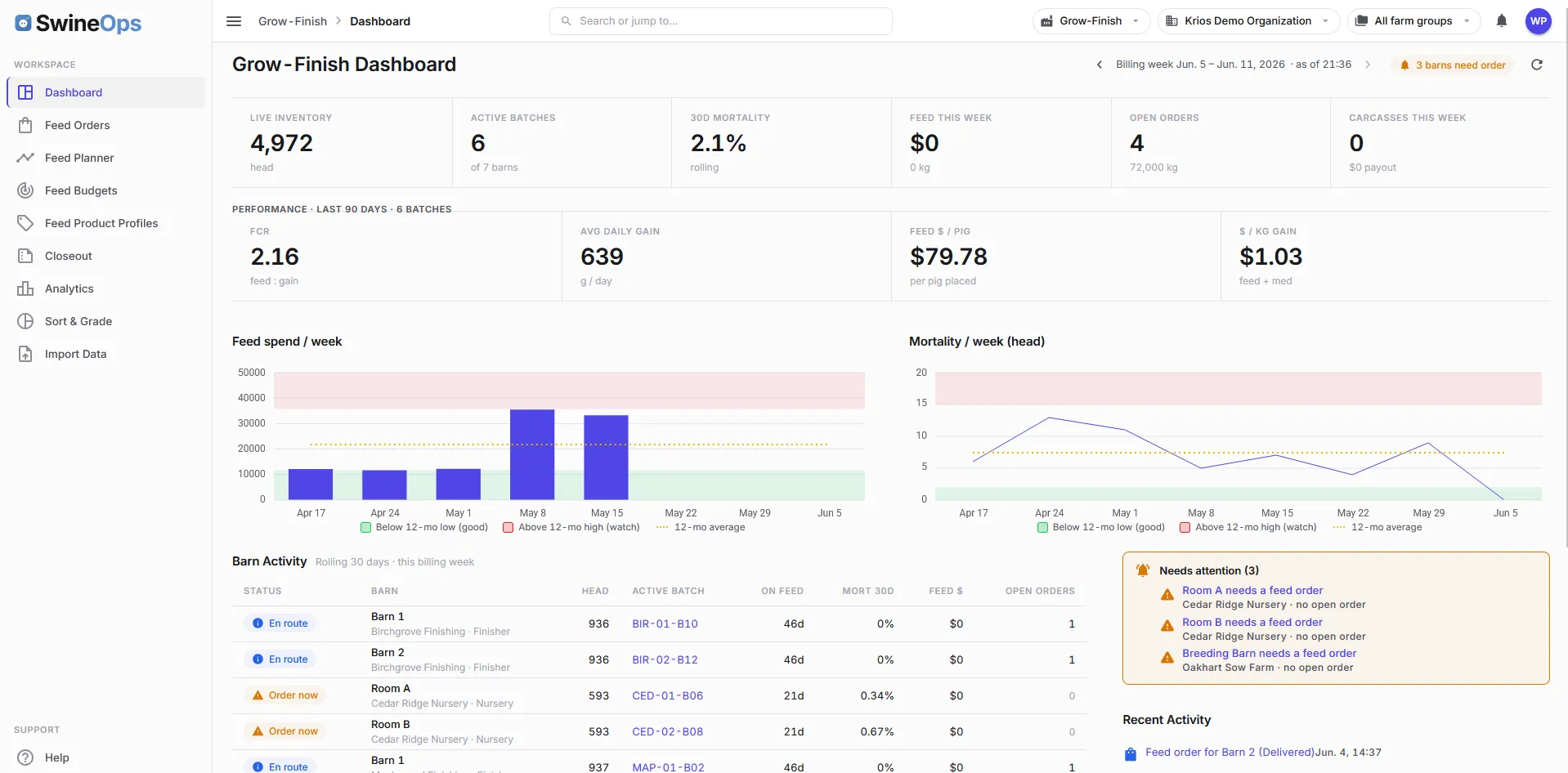
The wean-to-market side of the operation. Track every batch from placement through ship, budget and reconcile feed against the batches that eat it, catch mortality and feed run-out problems the day they happen, and close out against the kill sheet — so cost per pig is a live number, not a closeout-day surprise.
What it does
Batch & barn management
- Batch tracking from placement through ship
- Movement logging — placements, transfers, and shipments — that keeps inventory current
- Mortality recording with cause codes
- Per-barn and per-batch inventory that stays accurate across moves
Feed budgeting & cost
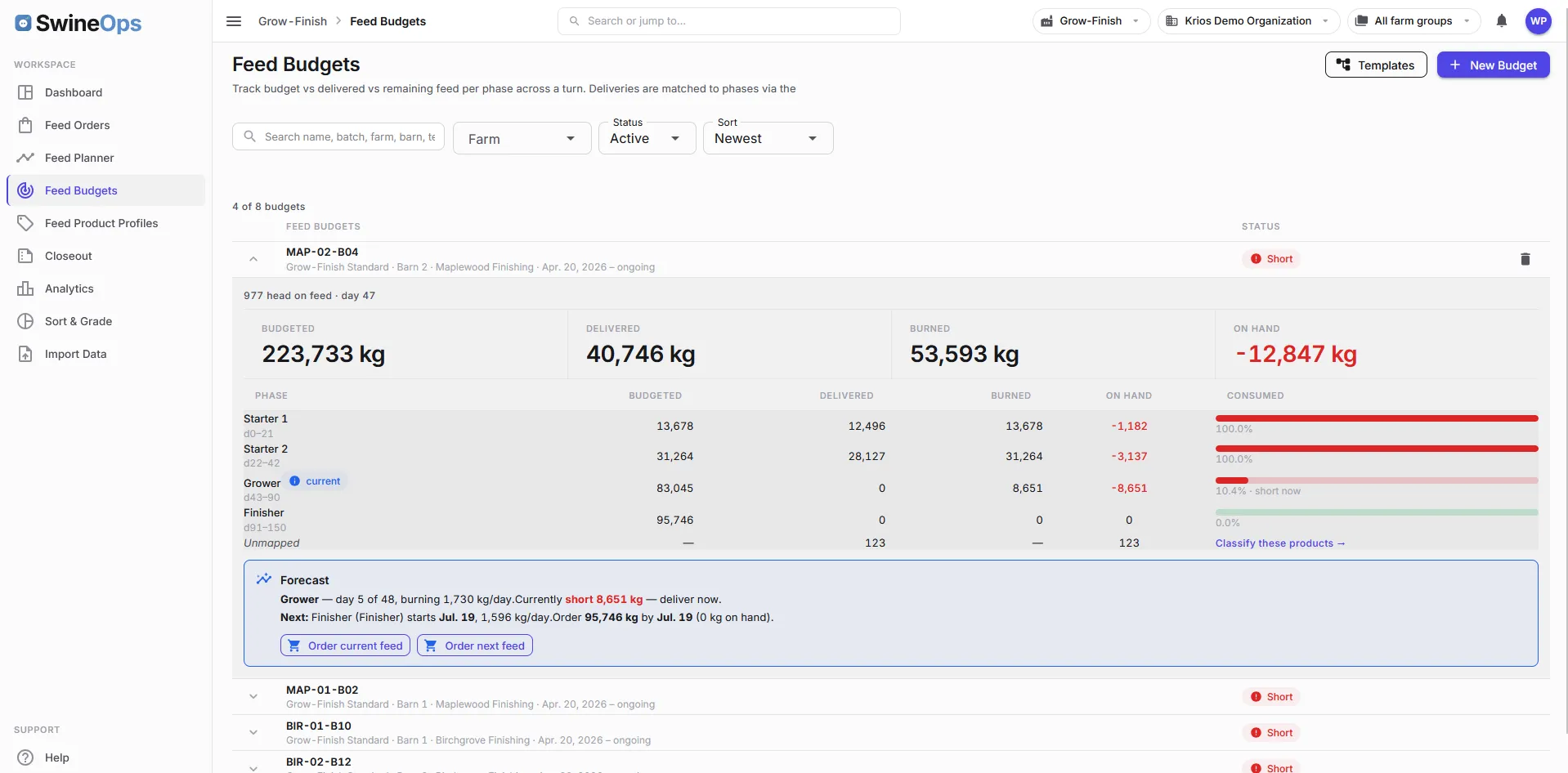
- Template-driven feed budgets across the production cycle
- Per-phase ration model — per-pig ration × head × days in phase
- Modeled burn vs delivered, so on-hand draws down per phase before the invoice lands
- Feed-cost forecast against active batches, with phase-by-phase variance once deliveries post
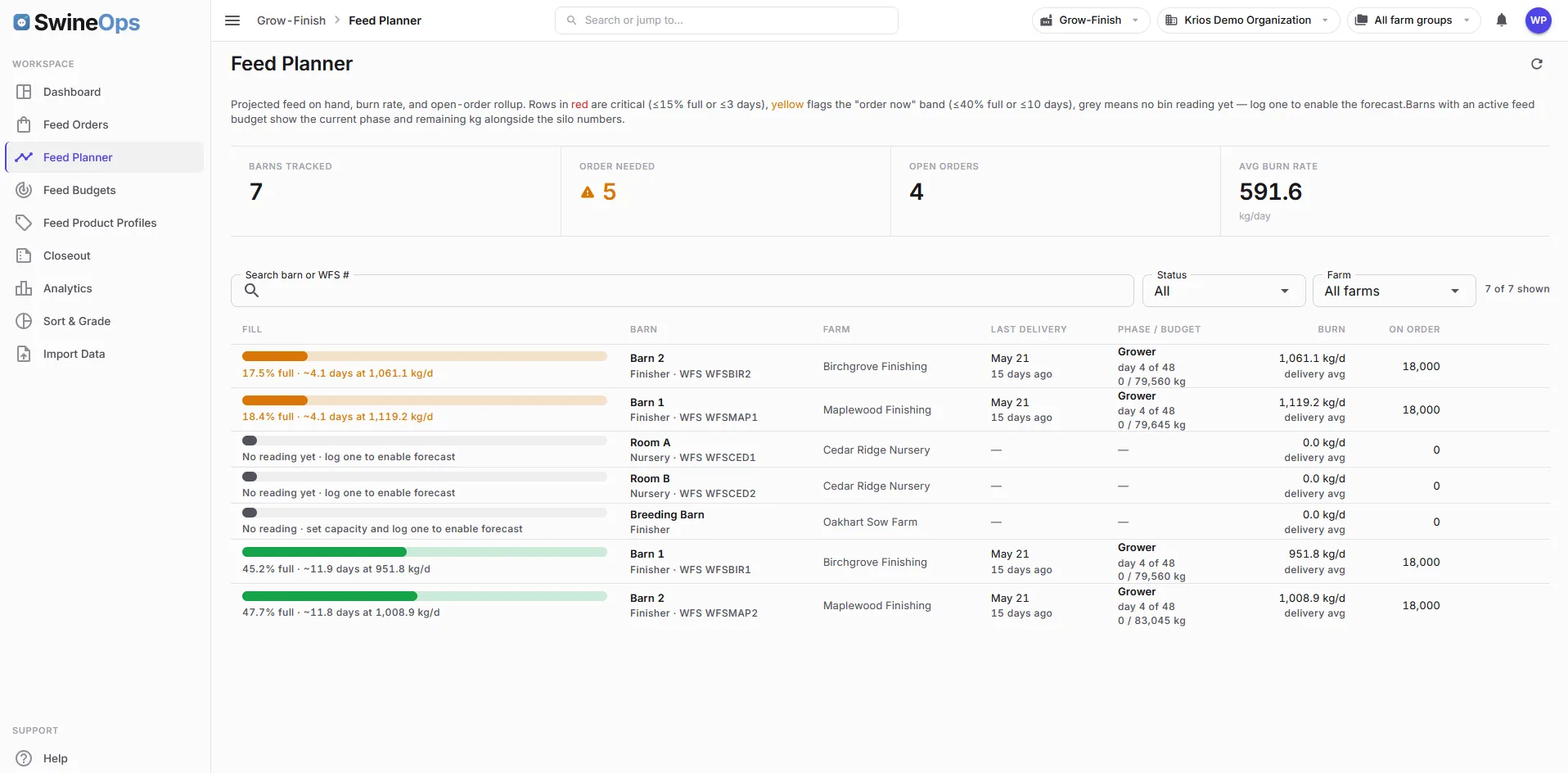
- Feed Planner — per-barn bin fill, burn rate, and run-out date with order-now prompts (auto-fed by BinSentry bin readings where installed)
Market & closeout
- Sort/grade analysis with premium and discount tracking against the packer grid
- Kill-sheet import and batch closeout
- Cost per pig and feed conversion that build live, not at month-end
- Actual and freight-adjusted cost side by side — self-haul freight added back and FCR restated to a standard weight window, so farms compare on a level field
- Single-batch or barn-range closeouts, and multi-batch comparison side by side on the same KPIs
A closer look
How it works
- 1
Place the batch
Open the batch at placement; head count and barn assignment start the record.
- 2
Budget the feed
Apply a feed budget template; per-phase ration burns against head and days as the batch grows.
- 3
Manage the barn
Log movements and mortalities from a phone; inventory, feed burn, and cost per pig stay current, and the Feed Planner flags a bin before it runs dry mid-phase.
- 4
Sort, ship & close out
Ship to the packer, import the kill data, and the batch closes out with cost per pig — actual and freight-adjusted — already built.
KPIs this module tracks
How it connects
Grow-Finish runs against the batches the Sow & Breeding module weans, and the feed it burns reconciles against the feed invoices captured in Financial — so modeled burn and real cost meet on the same batch. Loads to the packer are Movement & Compliance events, and the barn's grow-finish status rolls up into the Operations Hub for the manager.
Grow-Finish is where the cost of a market hog is actually made, and most of it stays invisible until closeout in a spreadsheet operation. SwineOps models feed burn against head and days as the batch grows, surfaces a bin about to run dry before it costs you a phase, and rolls the kill sheet back onto the batch — so feed conversion, days to market, and cost per pig are numbers you watch all the way to the packer, not ones you reconstruct after the pigs are gone.
Frequently asked
Is "consumed" feed what was delivered, or what was eaten?
Can I compare cost per pig fairly between a delivered-feed farm and a self-haul farm?
How does sort and grade tracking work?
Can barn staff capture mortalities and moves on a phone?
See Grow-Finish on your operation.
20 minutes, tailored to how you run.